The supply chain lifecycle
A control tower, supplier portal, and vendor-risk system for enterprise procurement.
Supplier questions stalled across email, phone calls, and spreadsheets, delaying approvals and supplies. Customers reported that these delays cost their organizations millions; procurement needed a clear way to get answers from the responsible departments.
Staff Product Designer
- Defined the vision and designed every screen across three product experiences
- Facilitated customer simulations and journey mapping to connect customer needs with business priorities
- Partnered with legal, finance, and ITSM designers for domain expertise
- Worked directly with C-level leaders and their teams at ServiceNow and customer organizations
Customer testing before and after launch validated the connected experience: procurement could route questions and track responses, while suppliers received updates.
The portal let procurement route supplier questions to legal, finance, ITSM, or another responsible department. Customers reported faster answers and better communication; launch surveys showed suppliers felt heard.
What took weeks now takes days. No more getting lost in emails, they actually get back to us faster. Engagement with our customers has been great.
Procurement and supplier feedback · Anonymous European automotive client
A closer look at the experience.
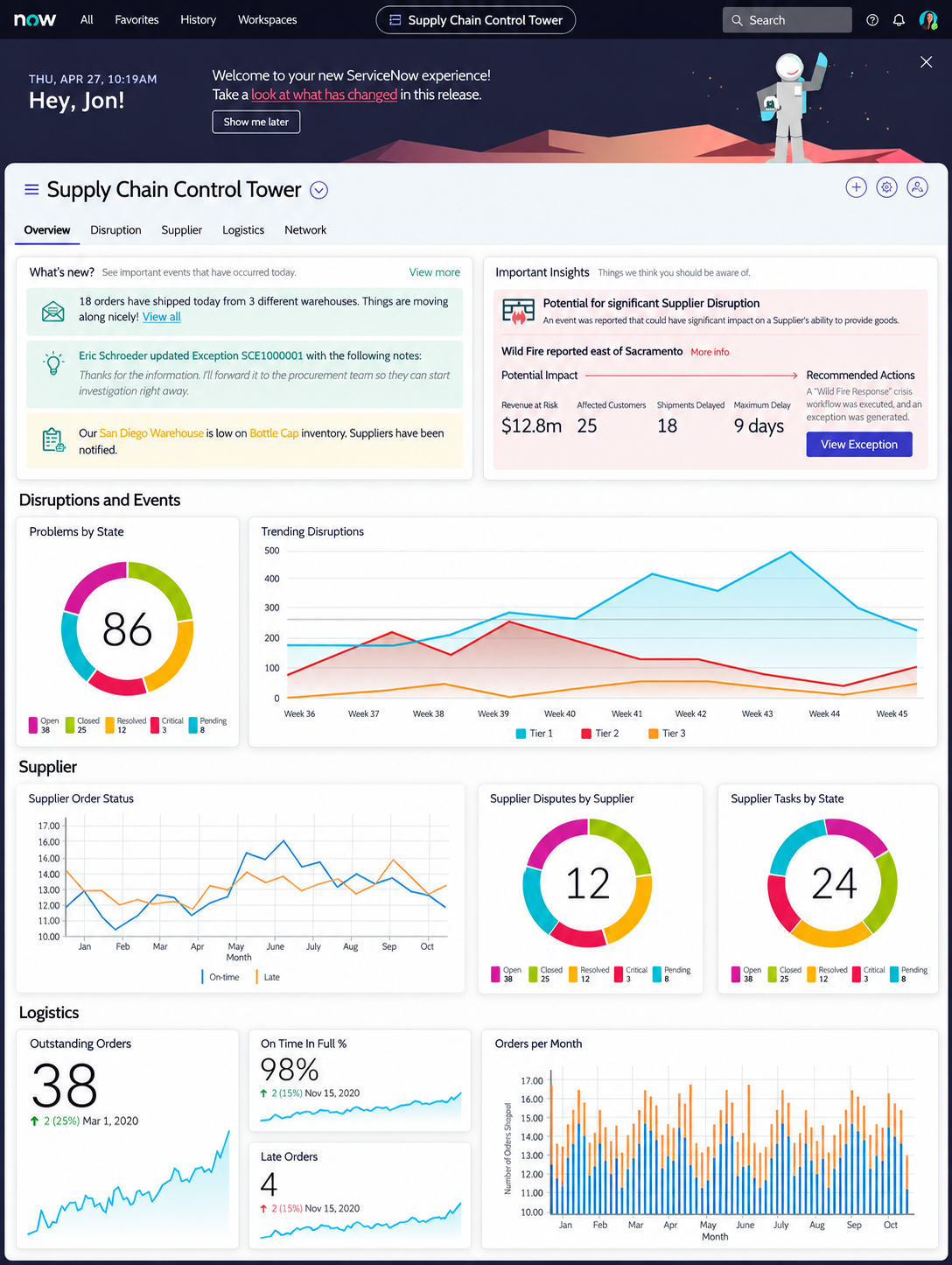
Supply Chain Control Tower
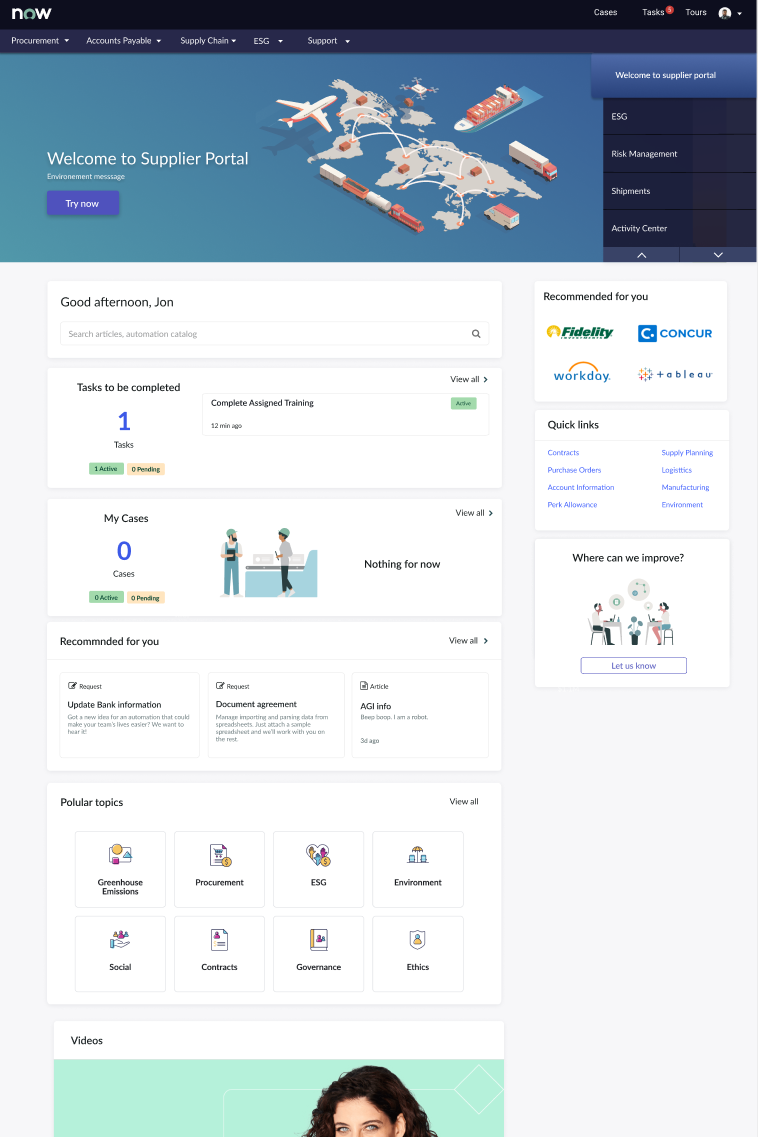
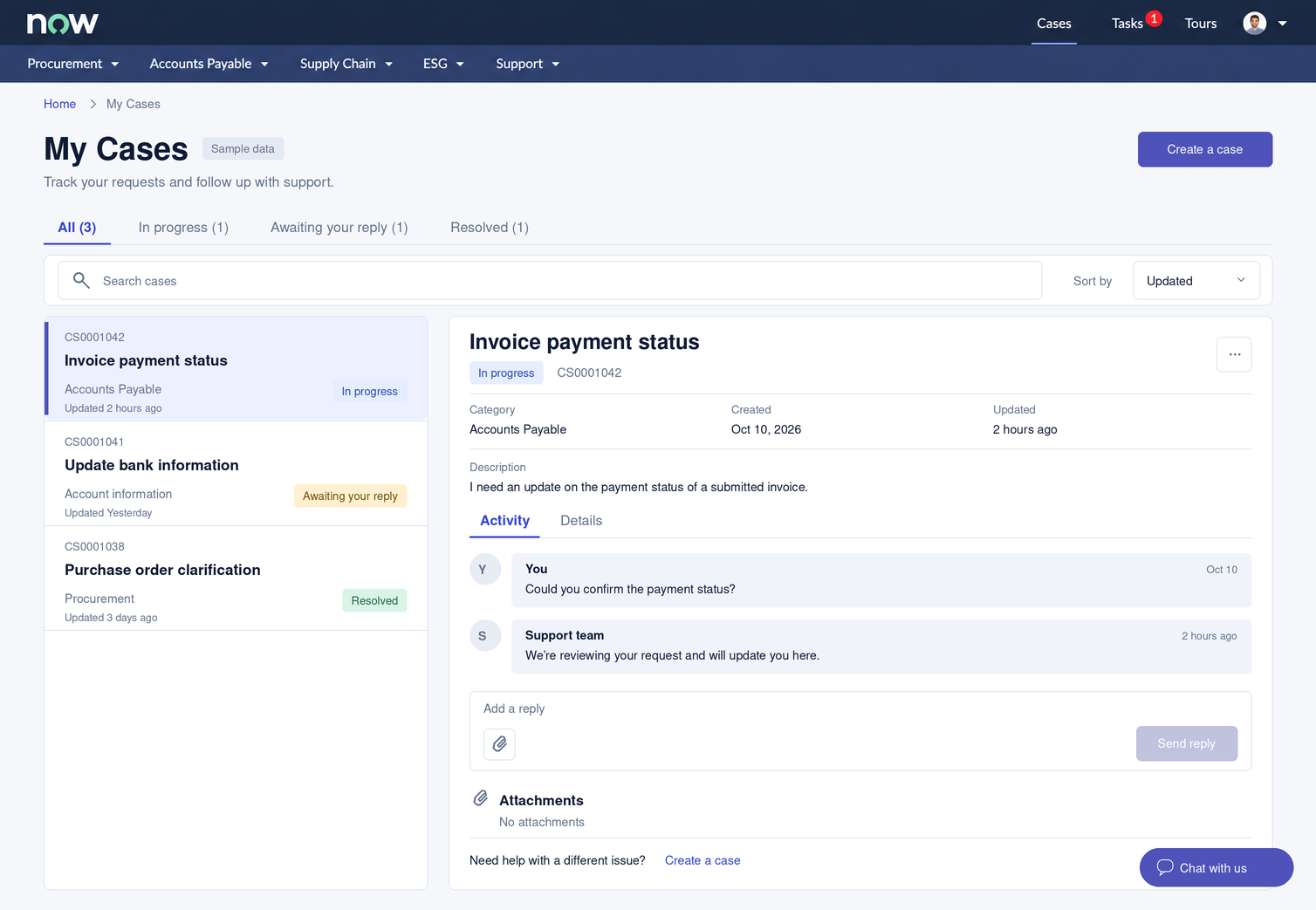
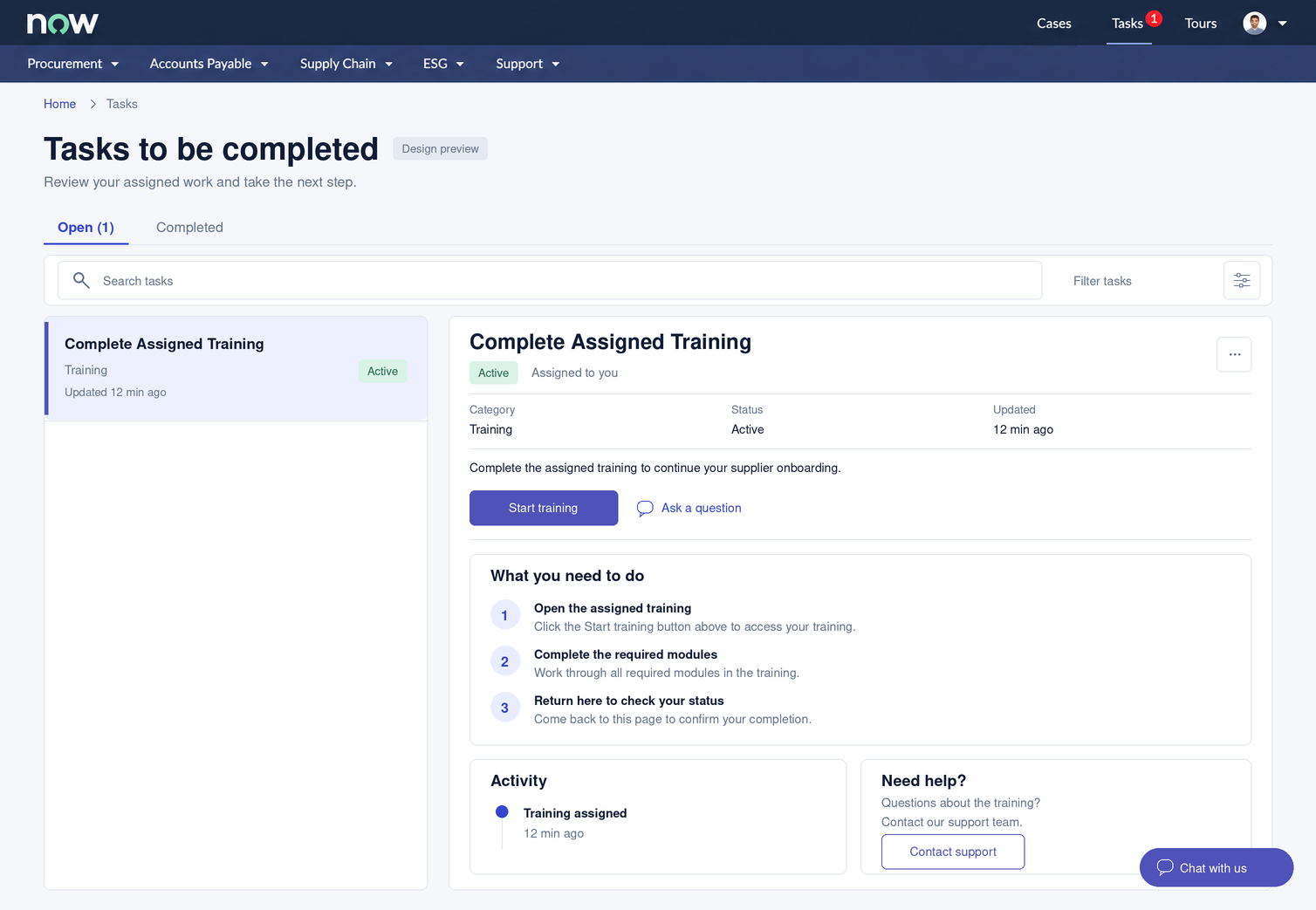
Supplier Portal
Vendor Risk
Want to see how we got there?
Staff Product Designer
- Defined the product vision in an ambiguous problem space
- Led customer research and facilitated supply-chain simulations and workshops
- Designed every screen across Control Tower, Supplier Portal, and Vendor Risk
- Partnered with legal, finance, and ITSM designers for domain expertise and integration guidance
- Aligned the design direction with customer goals and business priorities
- Worked directly with C-level leaders and their teams internally and at customer organizations
About the project
ServiceNow set out to bring supply-chain orchestration into a single platform, connecting procurement, suppliers, legal, finance, and vendor-risk teams around shared, observable workflows.
I defined the vision and owned end-to-end product design for this new product, from customer research and workshop facilitation through delivery. I designed every screen across the Supply Chain Control Tower, Supplier Portal, and Vendor Risk. Designers from legal, finance, and ITSM contributed expertise about their existing products so I could understand the capabilities and integrate them into the supply-chain experience. I used the research to align customer goals with business priorities, working directly with C-level leaders and their teams at ServiceNow and customer organizations.
The problem
Coordination was scattered across email, phone calls, and Excel sheets. Suppliers and procurement teams struggled to get answers from one another, straining their relationship as information moved between disconnected channels. Unanswered questions held up approvals and deliveries, sometimes for months. Customers reported that communication delays had held up supplies and cost their organizations millions of dollars. Legal, finance, and vendor-risk teams also lacked shared visibility, adding financial and compliance risks.
Discovery & research
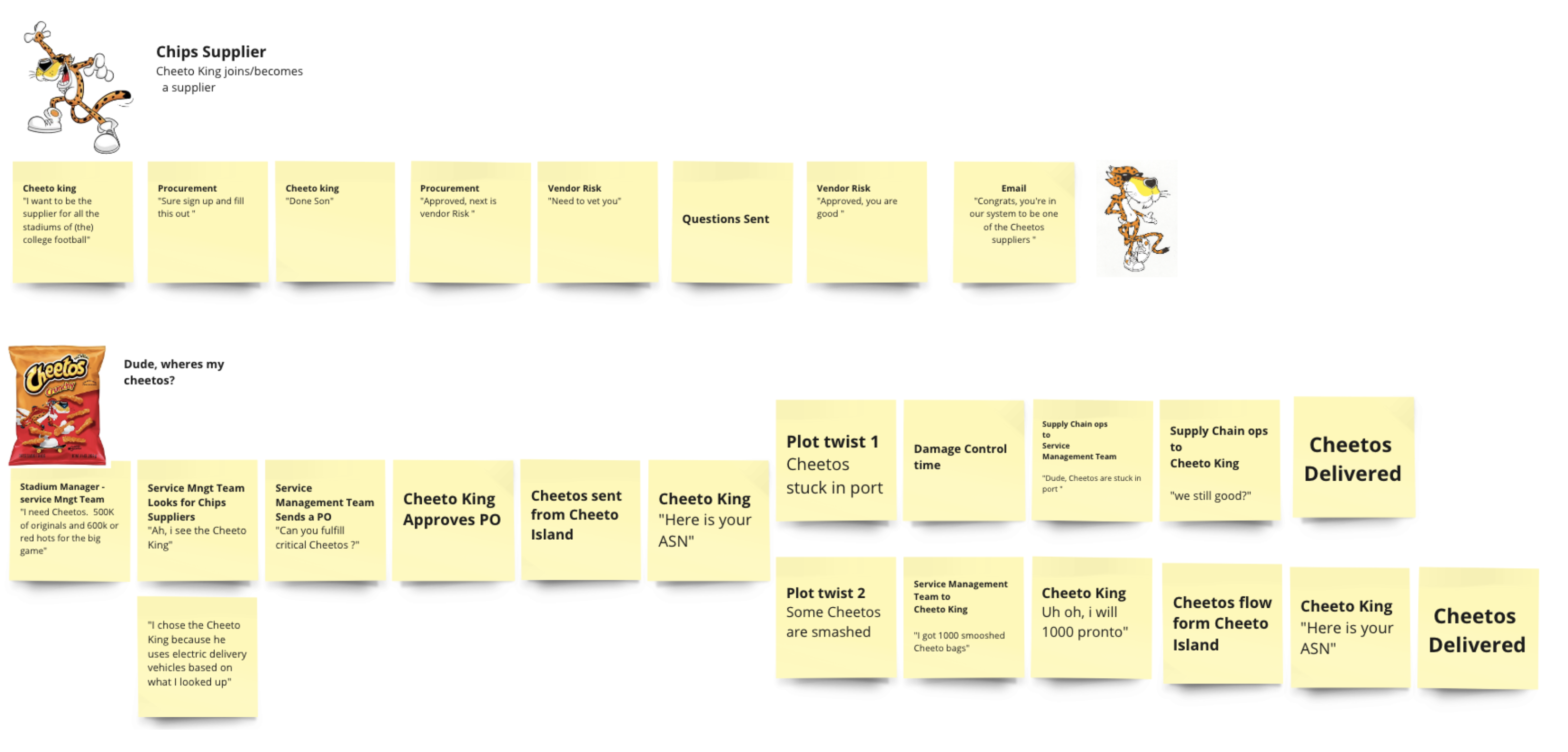
I facilitated customer workshops using a Cheetos delivery scenario to understand how supply chains worked from the perspectives of procurement and suppliers. Together, we simulated the journey and mapped how requests, questions, and decisions moved between them. This revealed the other departments and product capabilities the experience needed to connect.
What we observed
- Legal teams blocking contracts due to unclear workflow ownership.
- Finance lacking visibility into vendor status and approval impact.
- Vendor risk operating in silos, without orchestration transparency.
- Procurement teams and suppliers were frustrated with each other. Customers reported that unanswered questions delayed supplies and cost their organizations millions.
How the research changed the direction: the simulation and journey map showed me where procurement needed input from legal, finance, ITSM, and other departments to answer supplier questions. That insight shaped the connected experience: suppliers could raise questions in the portal, and procurement could route them to the team responsible for the answer. I worked with the relevant domain designers to understand their products and design those connections.
Personas & journey maps
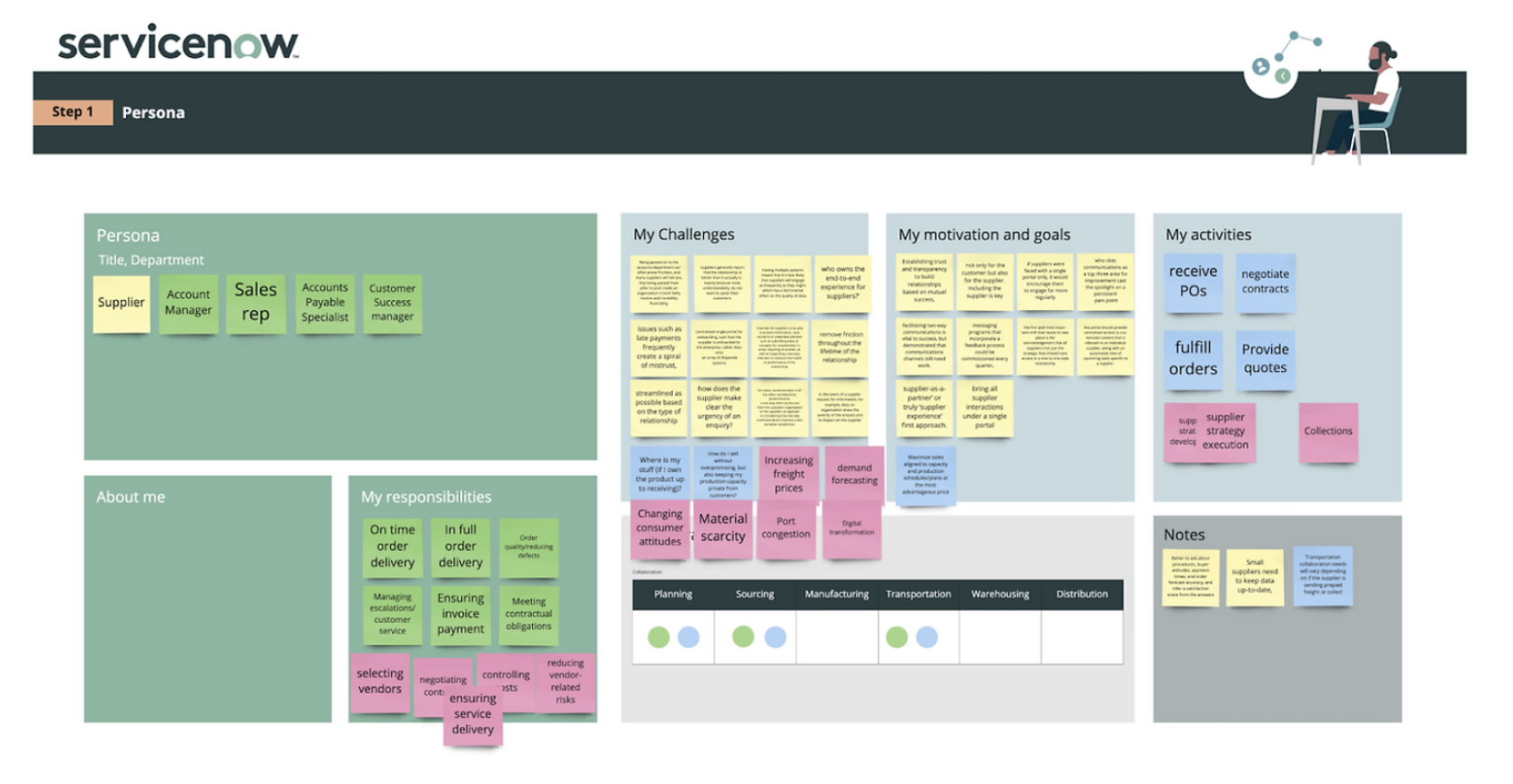
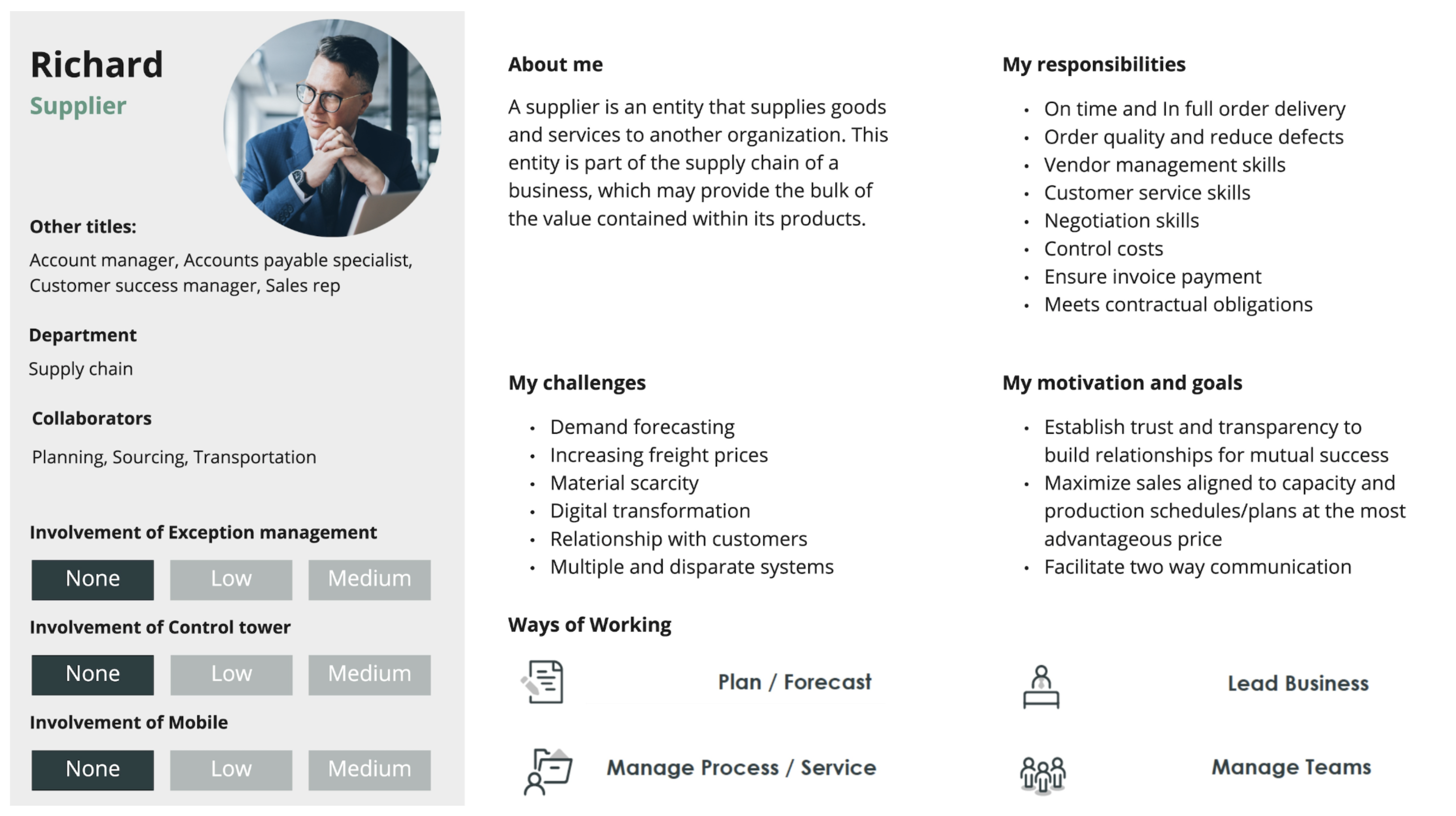
I used procurement and supplier personas to make both groups’ goals and challenges visible. Together with the journey map, they showed where their needs depended on one another and helped build customer buy-in for a connected experience spanning procurement and the supplier side.
Designs
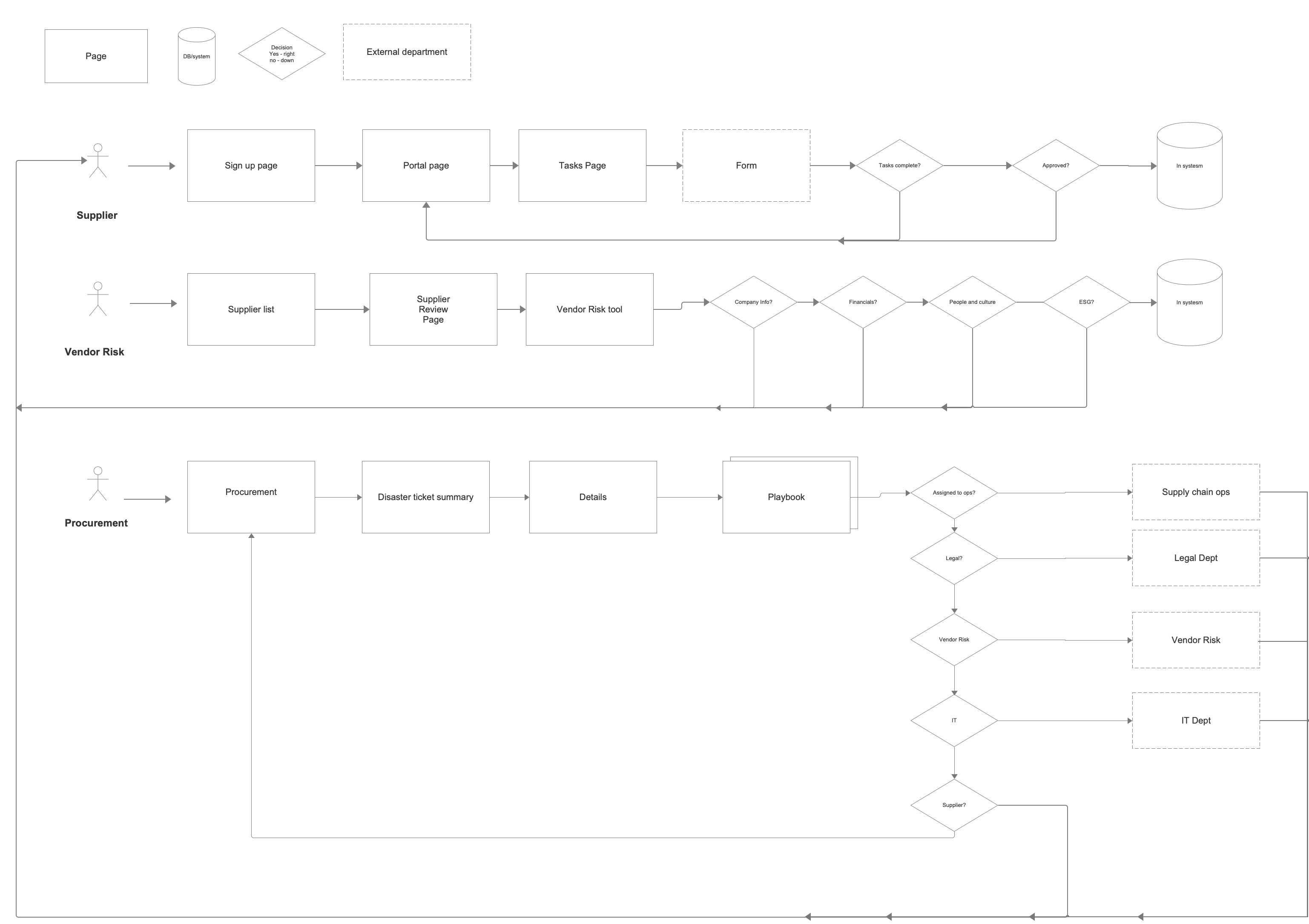
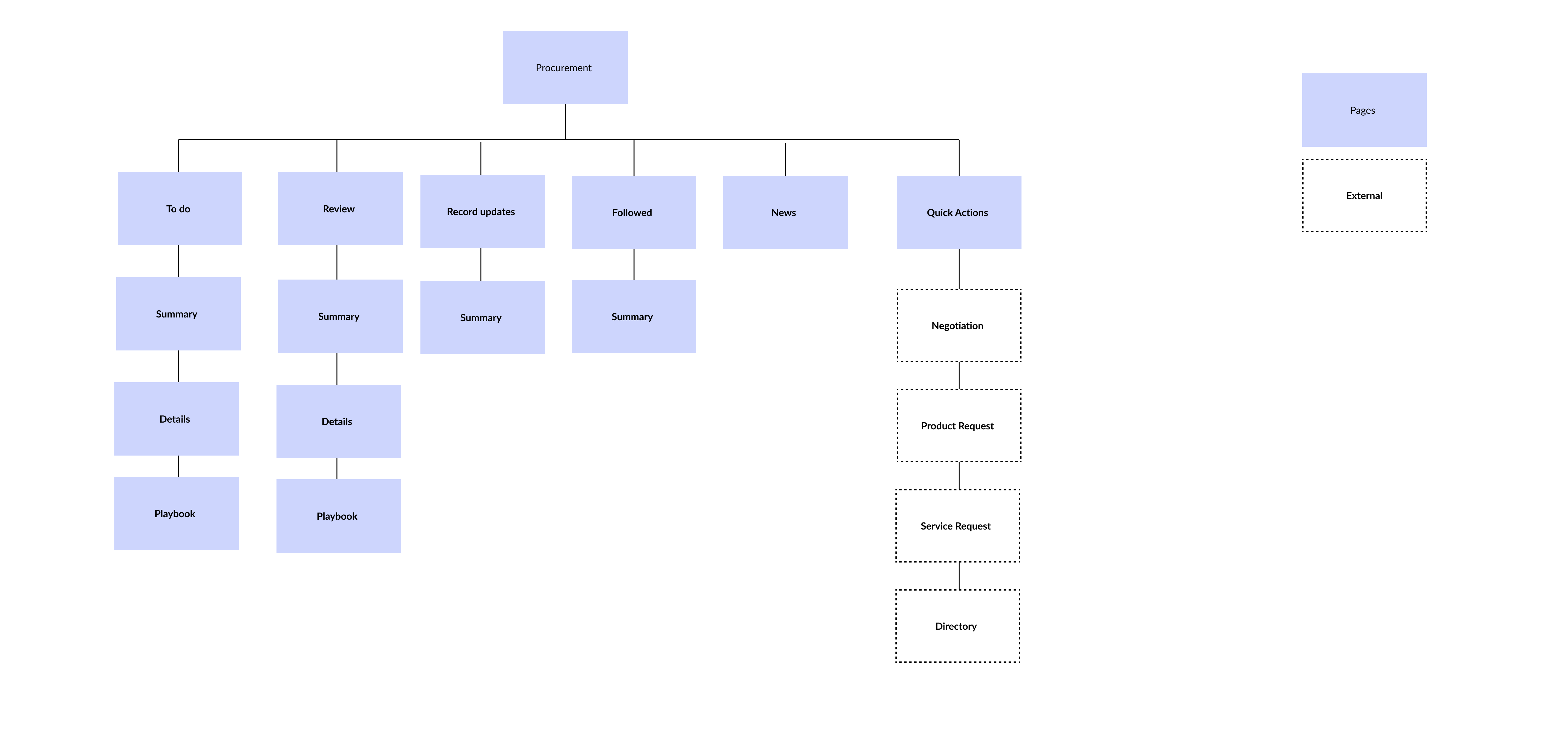
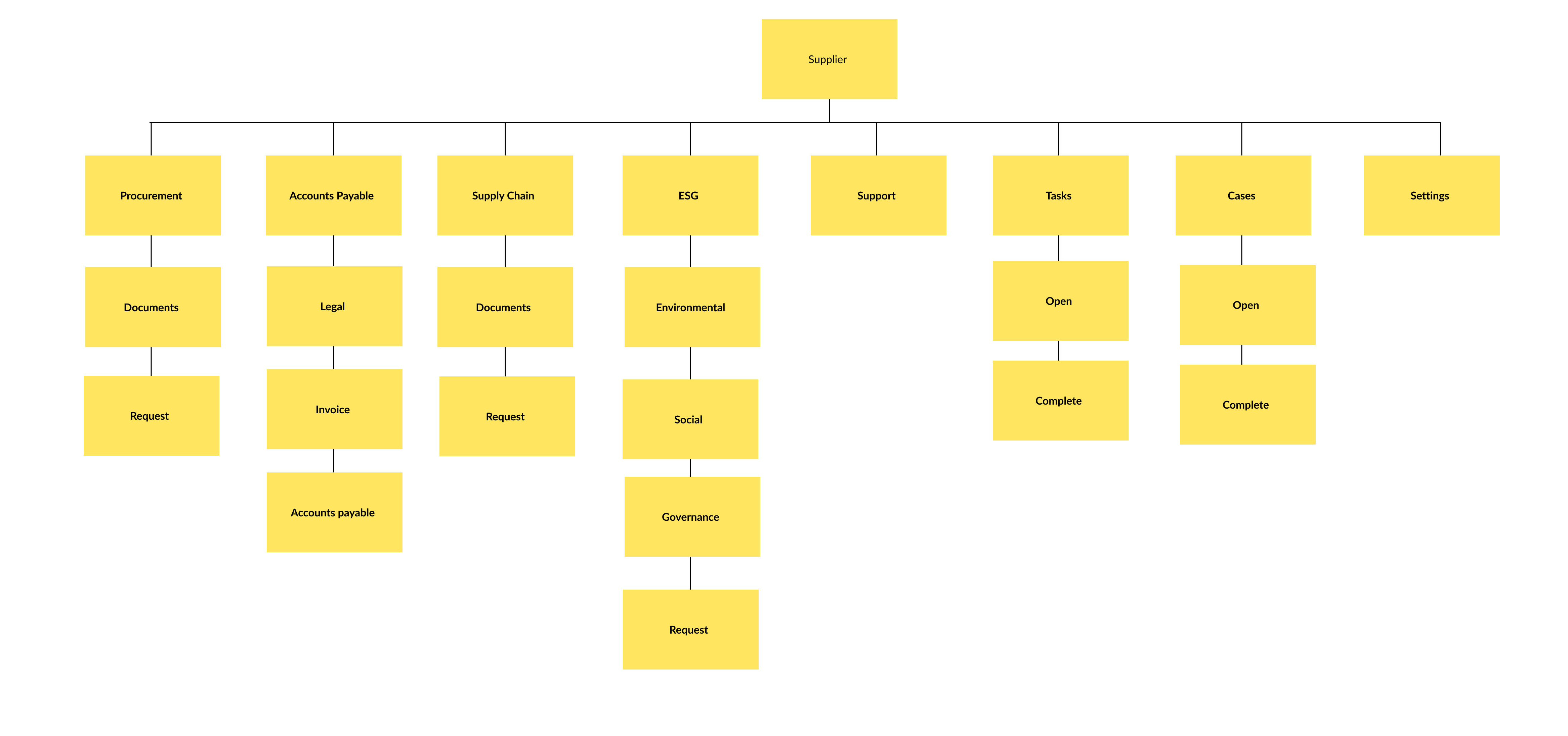
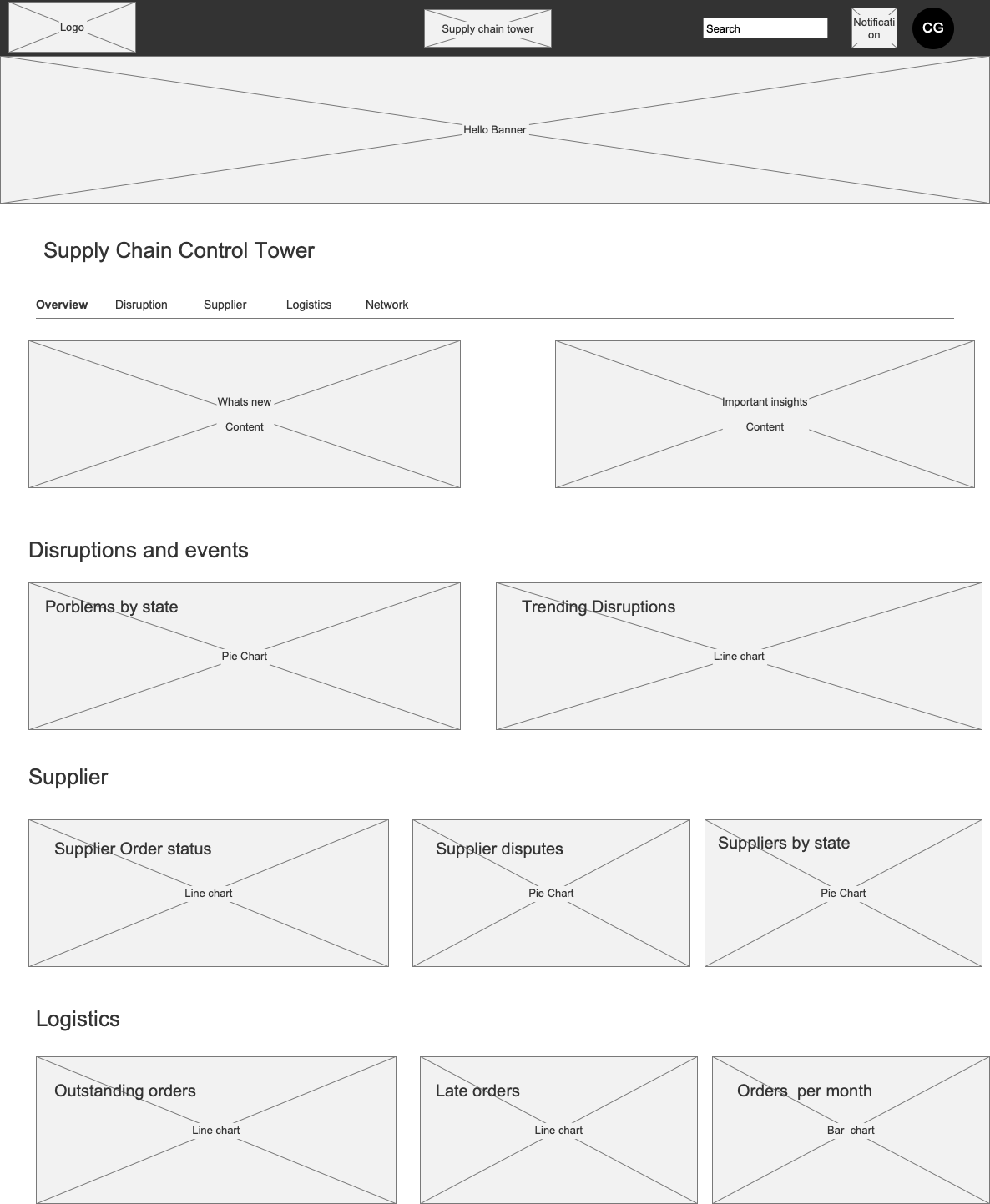
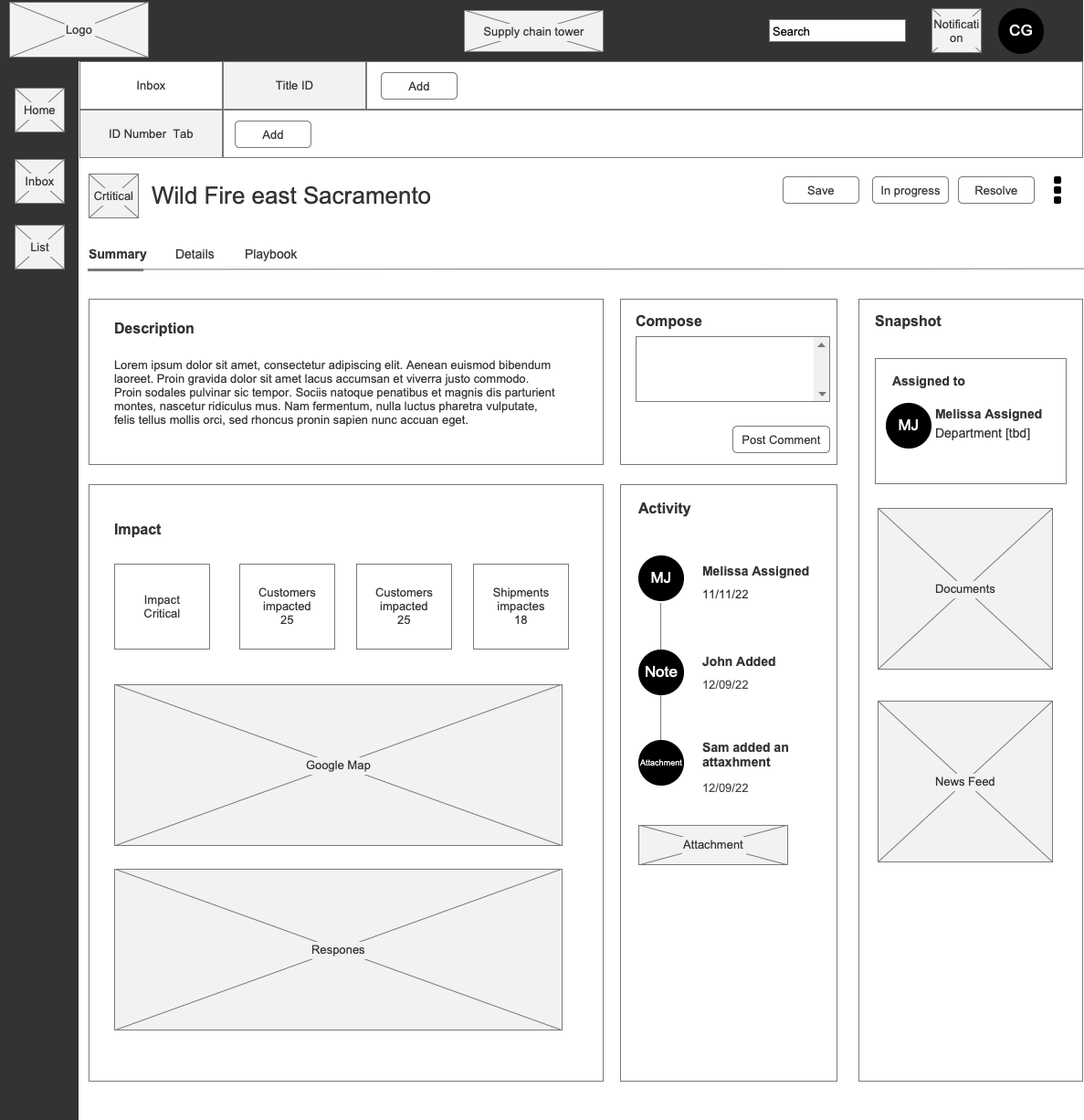
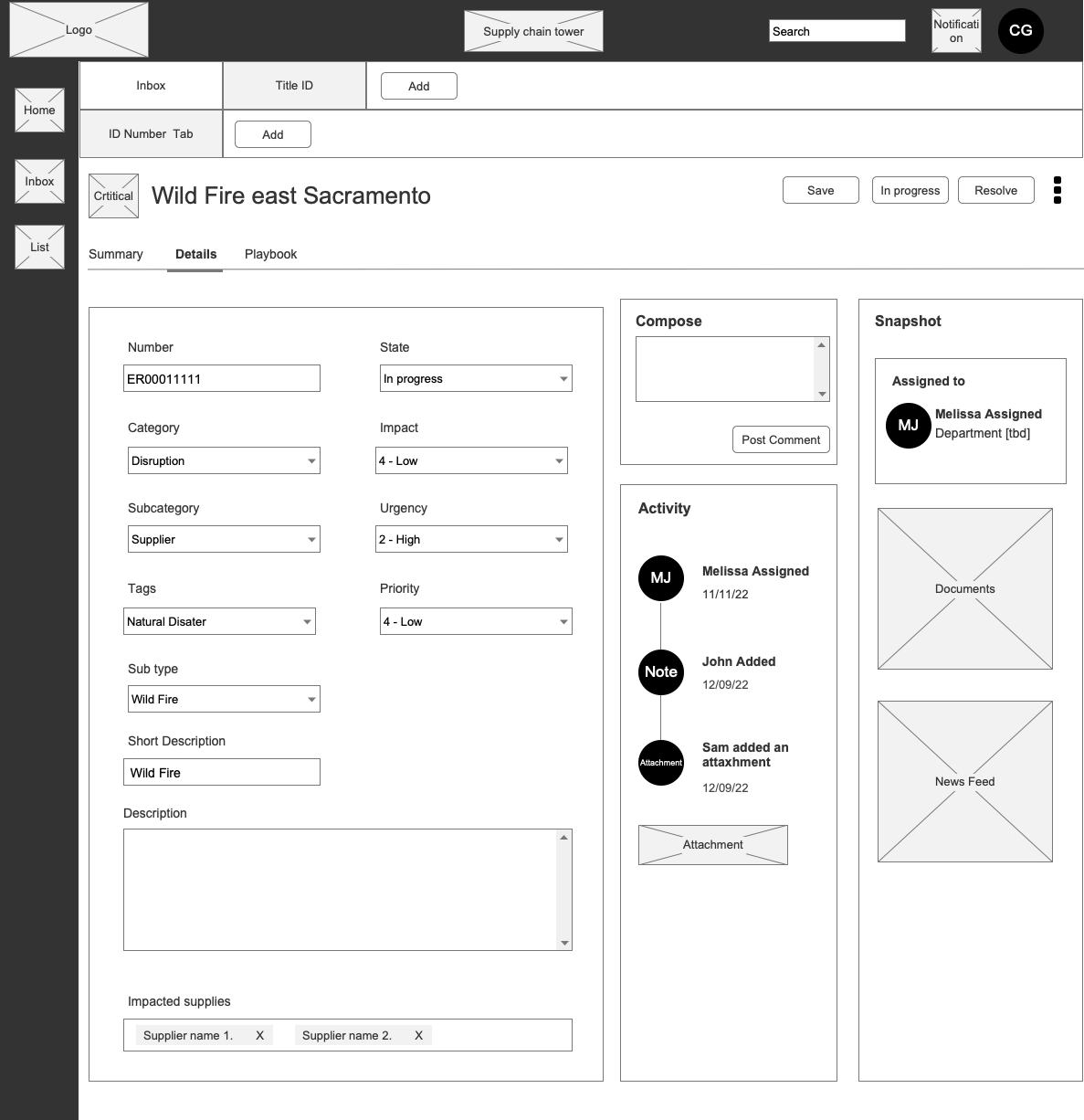
With research and journey insights defined, I translated the complexity into simplified user flows, sitemaps, and wireframes so engineering and product could quickly digest the structural changes.
User flows & sitemaps
Wireframes
UI design
The Control Tower, Supplier Portal, and Vendor Risk experiences shown below shipped to customers.
I used shared design-system components to make ownership, impacts, and next steps clear, helping teams coordinate complex workflows across departments.
Customer testing · Validating the connected experience
We tested the built product with customers before and after launch across the Control Tower, Supplier Portal, and Vendor Risk experiences. These sessions confirmed the design direction rather than prompting a new one.
- Clearer ownership and routing: procurement found it simpler to send supplier questions to the responsible department and see ticket status and how long answers took, visibility they had lacked before.
- Supplier updates: suppliers valued being notified when their requests were updated, rather than having to rely on disconnected email follow-ups.
- Coordination across products: procurement understood how to direct work to the appropriate department within the connected experience.
Separately, customer surveys supported the relationship outcome: procurement and suppliers reported faster communication, clearer knowledge of who they were communicating with, and increased trust.
The tradeoff · Broader scope for a connected experience
The customer journey map revealed dependencies on legal, finance, and ITSM that internal business stakeholders had not fully understood. I recommended involving those product teams so supplier questions could reach the departments responsible for answers. This added coordination work and required a longer timeline. I worked with my product manager to explain why the broader scope was necessary, and with engineering to understand what needed to be built. I partnered with the domain designers to understand their products and designed the connections into the supply-chain experience.
Control Tower for Procurement
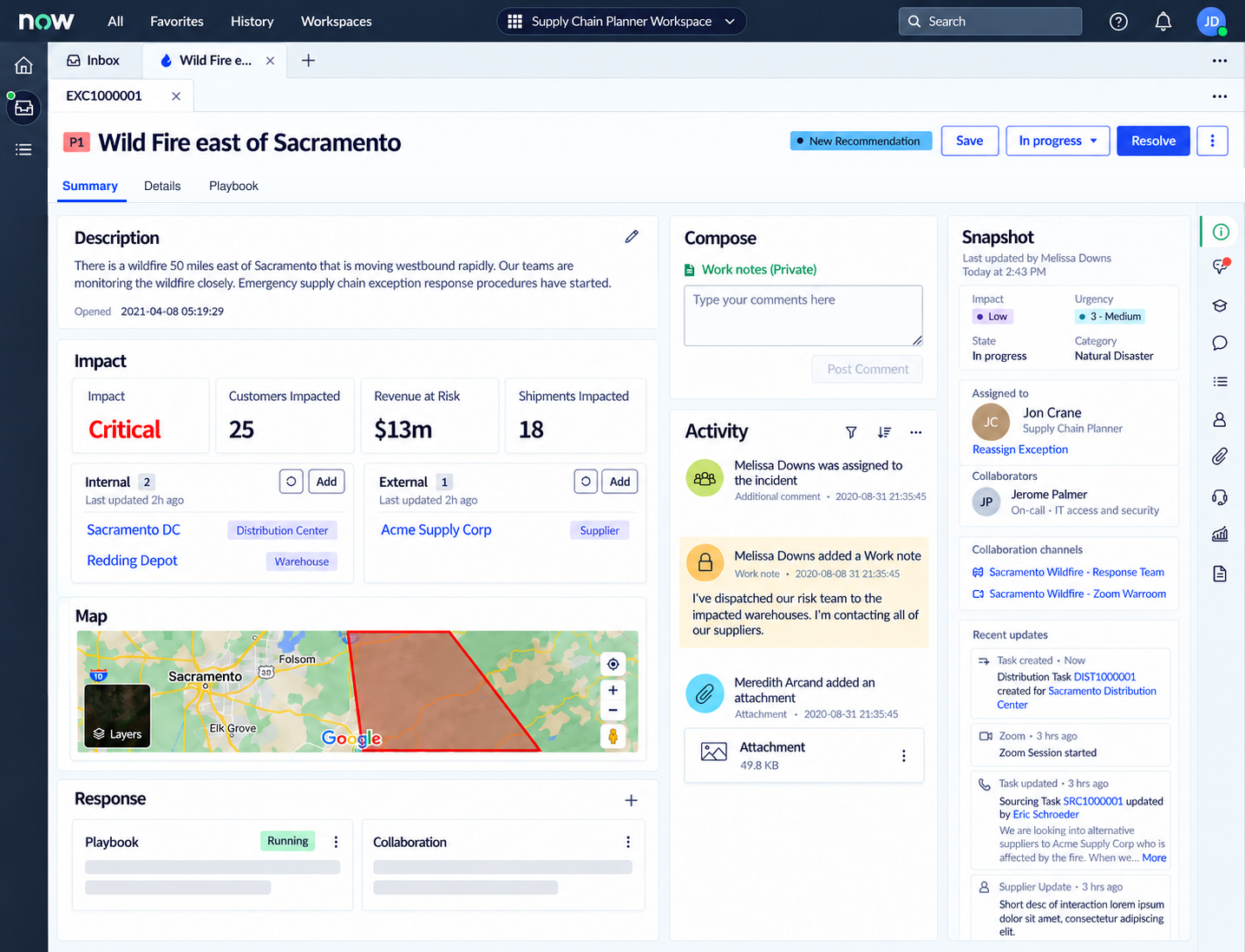
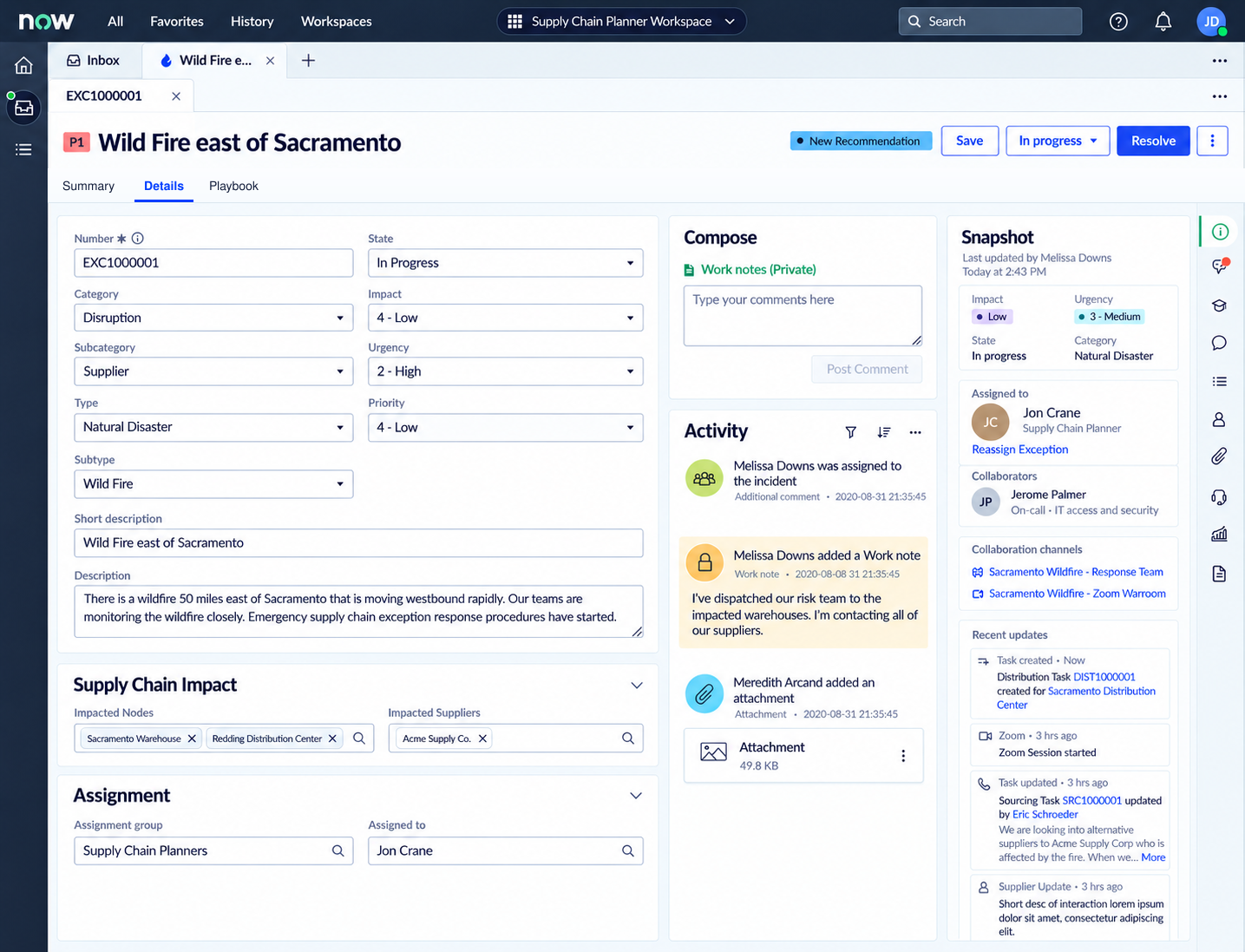
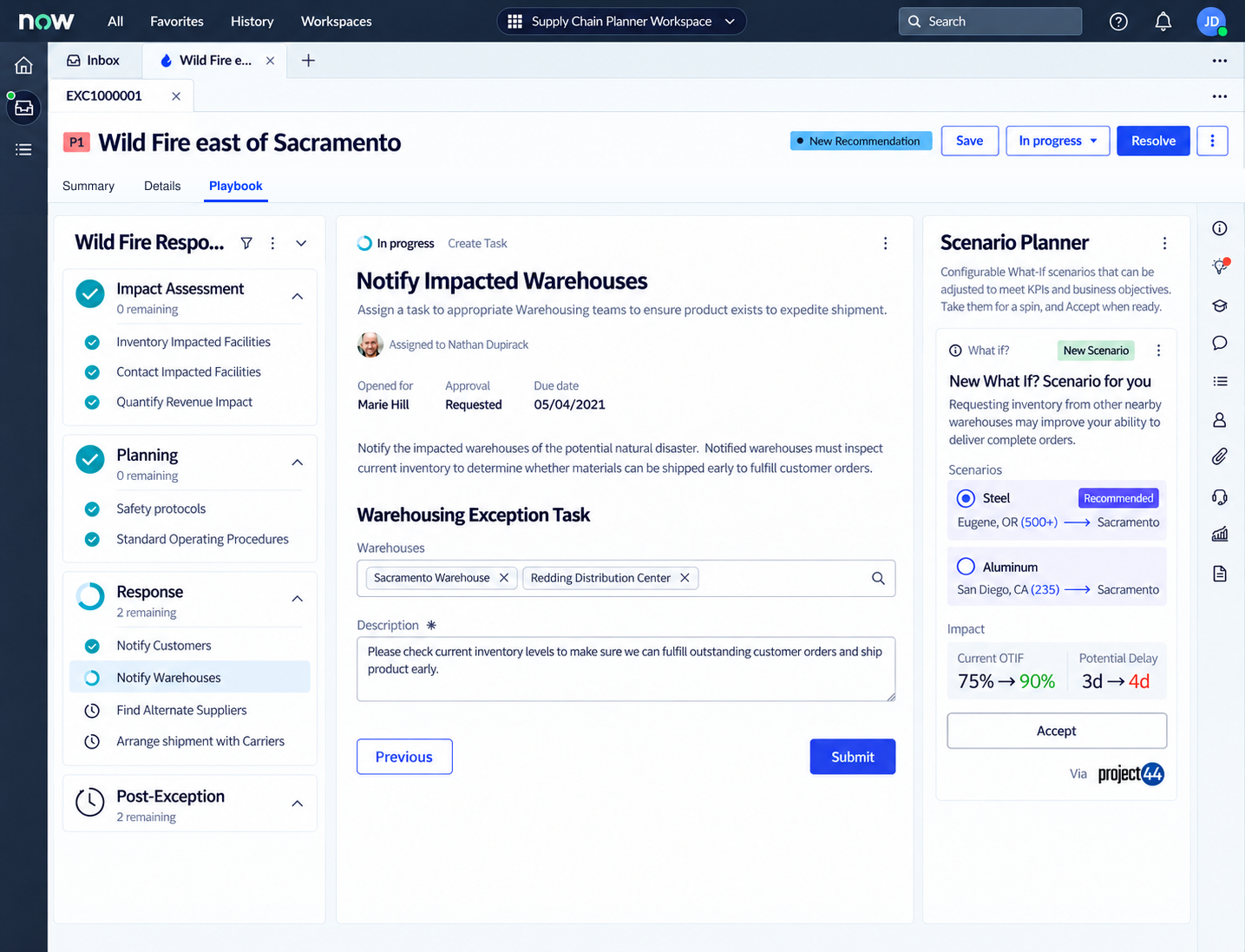
I designed the Control Tower to help teams spot supply-chain disruptions, assess their impact, assign an owner, and plan a response. It brought procurement, supplier, and vendor-risk information into a shared view.
- See affected locations, customers, and revenue.
- Clarify who owns the response.
- Use playbooks and what-if scenarios to plan next steps.
Supplier Portal
I designed the Supplier Portal so suppliers could track tasks, ask questions, and follow cases in one place. It connected their work with procurement and the internal teams responsible for answers.
- Show onboarding progress and required documents.
- Keep requests, replies, and case status together.
- Make assigned tasks and next steps clear.
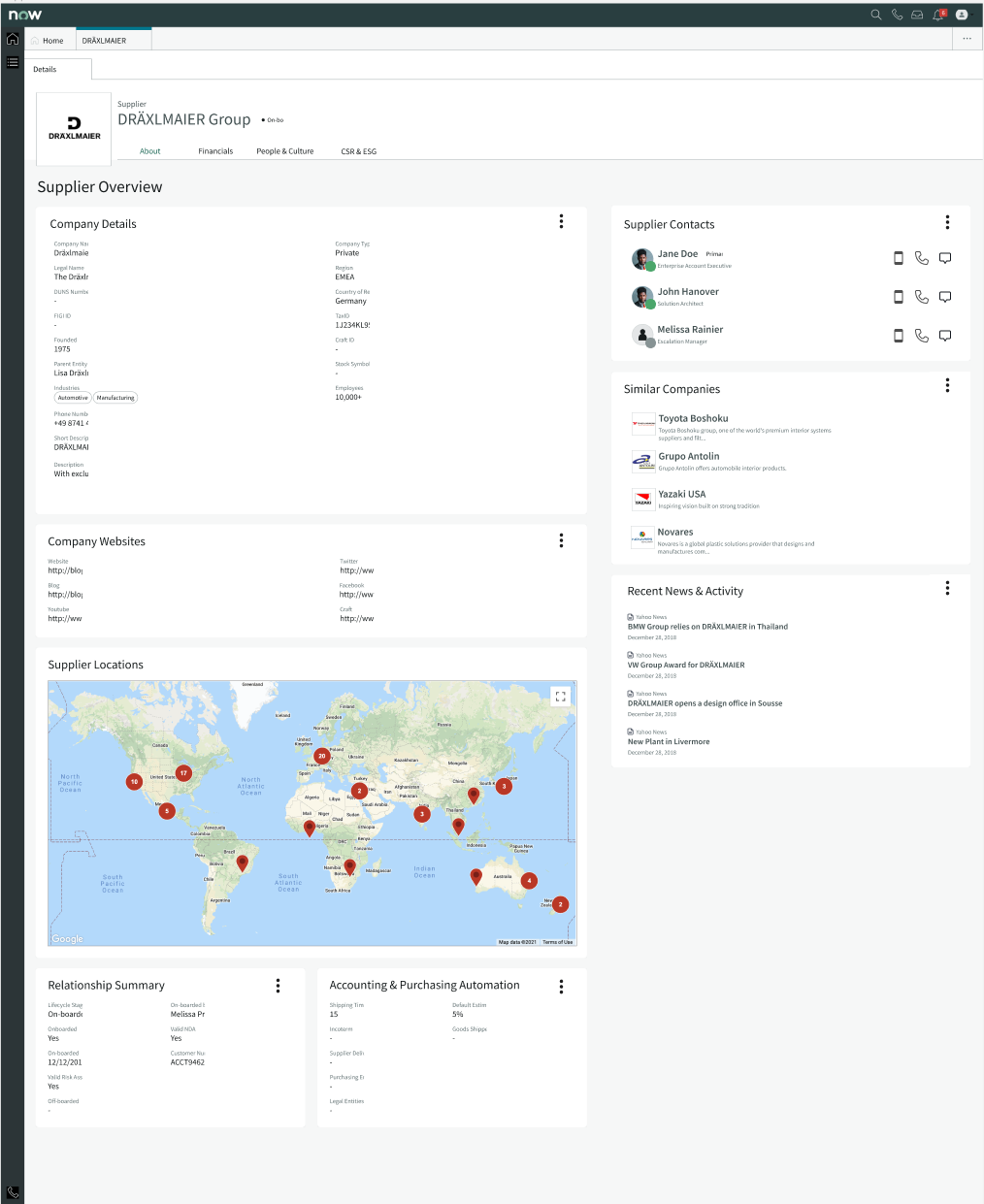
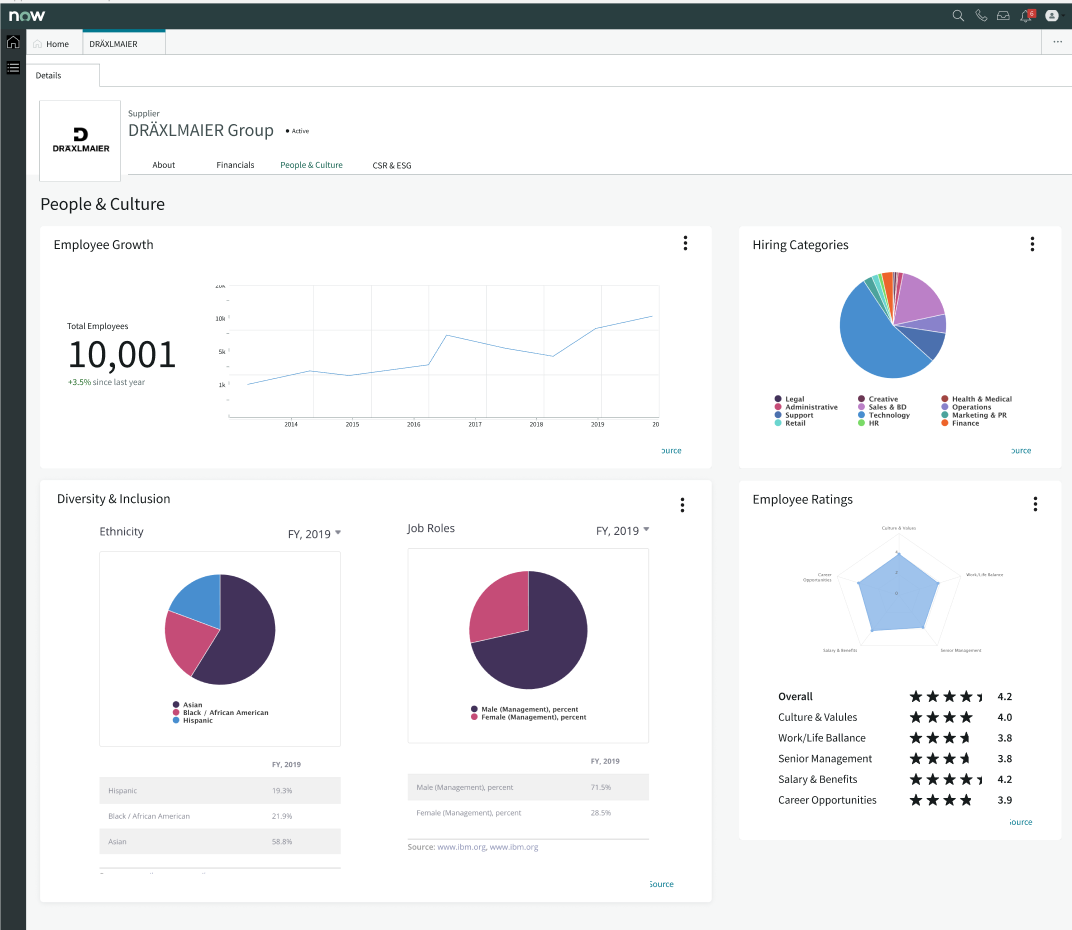
Vendor Risk
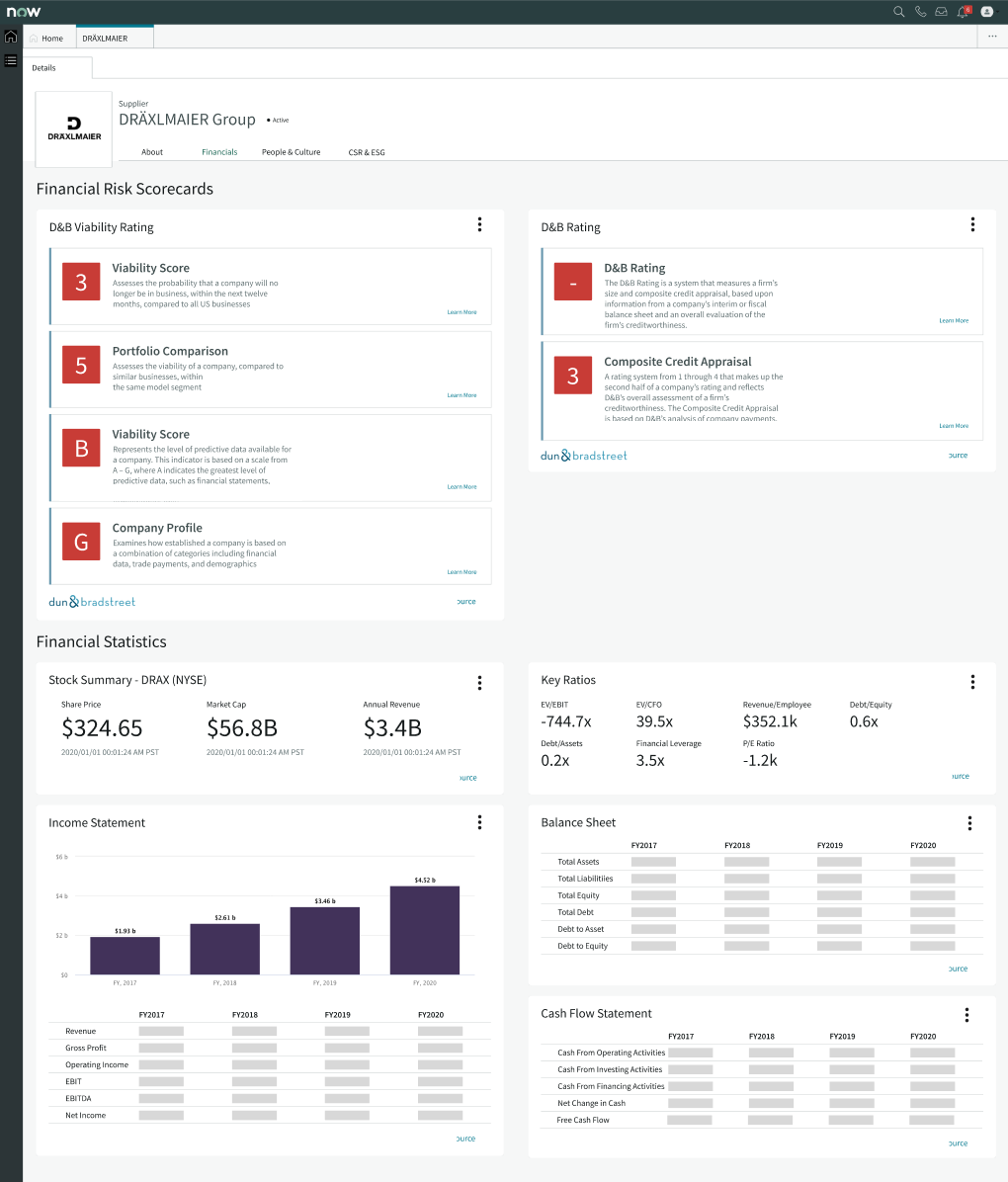
I designed Vendor Risk to bring supplier information and risk reviews into the procurement process, with clear ownership and the context teams needed to make decisions.
- Review supplier details, contacts, and locations.
- Assess financial risk through scorecards and ratings.
- See who owns each review and what is needed next.
Results & impact
The Control Tower, Supplier Portal, and Vendor Risk experiences shipped to customers. Customer feedback highlighted better working relationships, faster responses, and easier access to information.
Happiness · A better working relationship
Goal: reduce frustration between procurement and suppliers. In surveys conducted when the product launched, suppliers reported feeling heard because procurement responded to their questions more quickly. Procurement and suppliers described better, faster communication, improving the relationship that scattered emails, calls, and spreadsheets had strained.
What took weeks now takes days. No more getting lost in emails, they actually get back to us faster. Engagement with our customers has been great.
Procurement and supplier feedback · Anonymous European automotive client
Task success · Faster answers and information finding
Goal: help teams get answers and find the information needed to move work forward. Customers reported that getting answers to supplier questions went from months to weeks. Organized requests helped procurement respond to supplier tickets faster and involve the team responsible for an answer.
It used to take me a couple of months and a lot of people just to find this information. I can’t believe I can now find it all in one place, weeks upon weeks of saved time. Incredible.
Vendor-risk feedback · Anonymous European automotive client
Procurement could route supplier tickets to legal, finance, ITSM, or another responsible department rather than chase answers across disconnected channels. Customers attributed the faster answers to this organized routing. The months-to-weeks result describes question resolution, not a measured reduction in the full delivery cycle.
BUSINESS OUTCOME · CUSTOMER PROJECTIONOne customer’s savings projection
One customer projected at least $50 million in supply-chain cost savings, based on its assessment of the cost of delays and the potential for faster communication and deliveries. The connected experience let procurement direct supplier questions to the responsible department, reducing the back-and-forth that held up work. It also supported coordination around supplier payments. The $50 million was this customer’s estimate of potential savings, not measured or realized savings.